 Skip to content
Organic Essential Oils Wholesale: A Practical Sourcing Guide for Your Skincare Brand
Most beauty entrepreneurs struggle to find truly reliable sources for organic essential oils wholesale. Sorting through claims, certifications, and quality checks can drain your time and energy before you even start creating. This guide breaks down what “organic” really means, how to request the right documentation, and how to pair bulk organic essential oils with ready-to-use skincare bases so you can customize, bottle, and sell your products faster without a lab. For more insights, you can check this link.
Understanding Organic Essential Oils
Grasping the essence of organic essential oils is crucial for your business success. Let’s explore what sets them apart and why they matter.
What “Organic” Really Means
When it comes to organic essential oils, the term “organic” signifies more than just a label. It reflects a commitment to natural farming without synthetic fertilizers or pesticides. These oils are produced under strict guidelines that ensure purity and sustainability. For beauty entrepreneurs, understanding this concept is vital. It means offering your customers a product that is not only effective but also eco-friendly and ethical. Most people think all essential oils are organic, but certification is key. Discover the benefits of certified organic essential oils.
Documentation to Request
To ensure you are purchasing genuine organic essential oils, request specific documentation. The most important is the Certificate of Analysis (COA), which confirms the oil’s purity and composition. This document provides assurance that the oils meet industry standards. Additionally, ask for organic certification documents from recognized bodies such as USDA Organic or ECOCERT. These certificates guarantee compliance with organic farming and production practices. Without these, you might end up with oils that aren’t truly organic.
Quality Checks for Oils
Quality checks are essential to maintain the integrity of your skincare products. Begin by examining the oil’s scent and color; genuine oils will have a distinctive aroma and consistent hue. Use paper chromatography to test purity, as it reveals any adulterants present. It’s also crucial to source oils from reputable suppliers who provide batch-specific COAs. These steps will help you ensure your oils are of the highest quality, enabling you to offer premium products to your customers.
Navigating Wholesale Purchases
Once you understand organic essentials, the next step is navigating the wholesale market. It involves evaluating pricing, suppliers, and purchasing strategies.
Pricing Realities and Options
Wholesale pricing for organic essential oils can vary significantly. Factors influencing cost include oil rarity, production volume, and market demand. Expect to pay more for certified organic oils due to the stringent standards they adhere to. While prices might seem high, remember you are investing in quality. Look for suppliers who offer volume discounts or loyalty programs to reduce costs without compromising on quality. For instance, buying oils like wholesale lavender oil in bulk can be cost-effective.
Selecting a Supplier
Choosing the right supplier is crucial for your brand’s reputation. Research potential suppliers thoroughly, checking reviews and testimonials. Ensure they provide comprehensive documentation like COA and organic certifications. A reliable supplier will also offer customer support and product transparency. Consider visiting the supplier’s facility if possible, to witness their production processes firsthand. This step establishes trust and ensures you receive high-quality oils consistently.
Bulk Buying Tips
Buying in bulk can be daunting, but it’s a wise decision for growing your brand. Start by assessing your storage capacity to avoid spoilage. Invest in proper storage containers that protect oils from light and air exposure. Consider the shelf life of each oil and prioritize purchasing those with longer sustainability. Establish relationships with suppliers for better negotiation leverage. This approach secures the best deals and ensures a steady supply for your business.
Launching Your Skincare Brand

With quality oils and a reliable supplier, launching your skincare brand becomes a tangible goal. Here’s how to bring your vision to life.
Pairing Oils with Skincare Bases
Pairing essential oils with ready-to-use skincare bases allows for seamless product creation. Choose bases that complement the properties of your chosen oils. For instance, pair a moisturizing base with oils like jojoba or almond for enhanced hydration. Experiment with different combinations to create unique products that address specific skin concerns. By doing so, you offer customers tailored solutions that stand out in the market.
Customizing, Bottling, and Selling
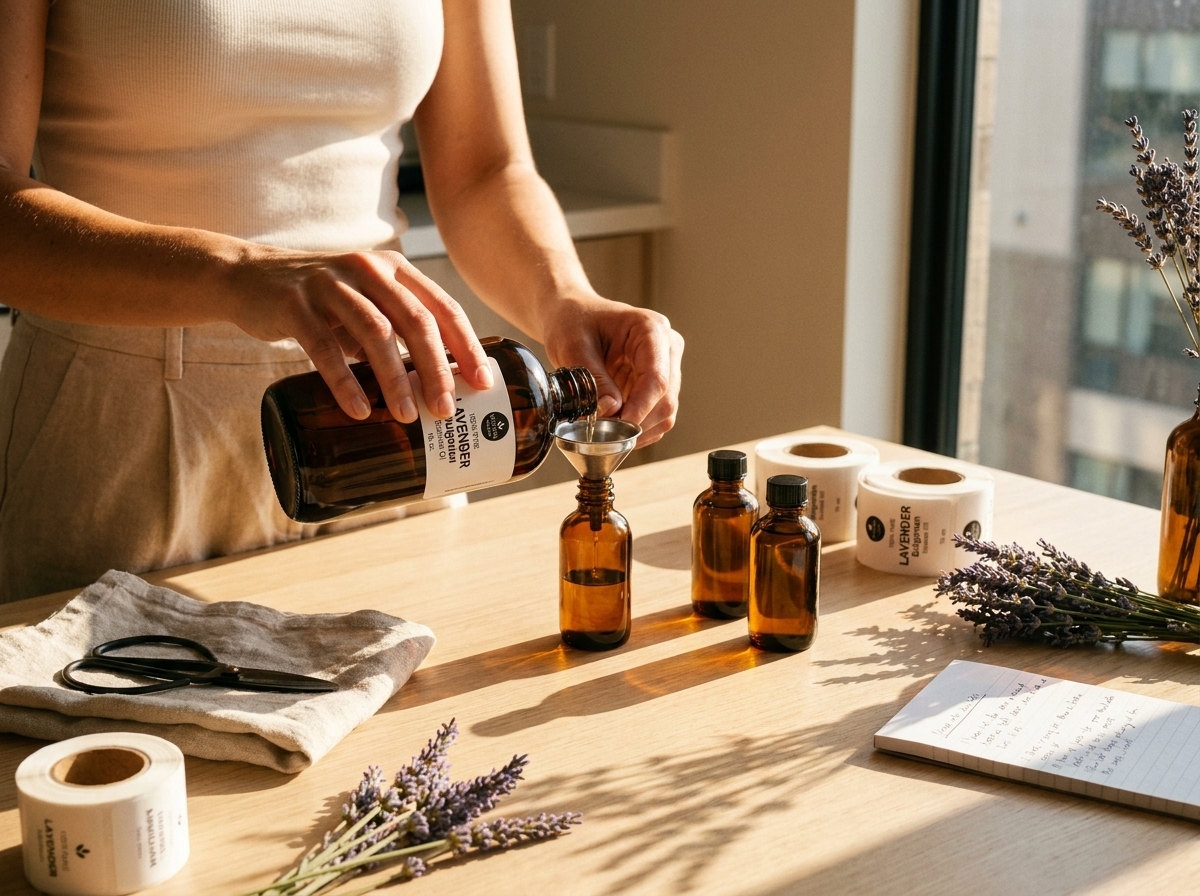
Customization is where your creativity shines. Decide on the concentration of oils in each product, keeping safety and efficacy in mind. Design attractive packaging that reflects your brand identity and appeals to your target audience. Invest in quality labels that provide essential product information, including ingredients and usage instructions. Once your products are ready, explore various sales channels, such as online platforms or local markets, to reach your customers effectively.
Fast-Track Your Product Launch
Ready to fast-track your launch? Focus on a few key products first to streamline production and reduce initial costs. Use feedback from test markets to refine and improve your offerings. Leverage social media and online marketing to create buzz around your brand before the official launch. This strategy generates anticipation and attracts early adopters. Remember, the longer you wait, the more opportunities you might miss. So, take action now and make your skincare brand a reality.